
University of El Oued
Introduction
The University of El Oued understands that Decent Work and Economic Growth (SDG 8) is not merely an institutional goal; it is the bedrock of a stable and prosperous future for the region. Our mission extends beyond the classroom to actively cultivating a sustainable economic ecosystem. This annual report outlines our deliberate, strategic actions this year—from ensuring fair labor practices and fostering robust social dialogue among all staff, to championing an entrepreneurial mindset among our students that will drive future job creation and economic diversification in the Algerian South. The University is fundamentally committed to integrating national economic strategy with our operational and academic mandate.
Fostering Decent Work Conditions and Social Dialogue
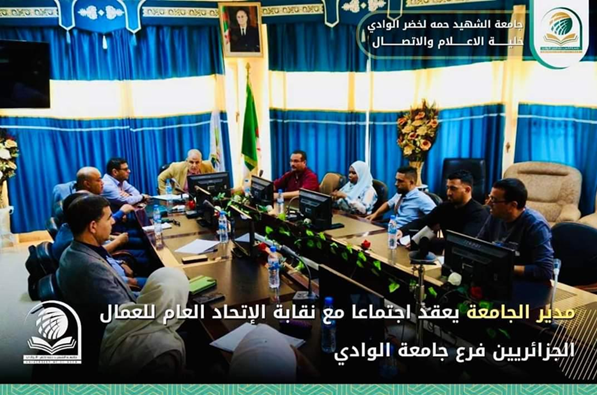
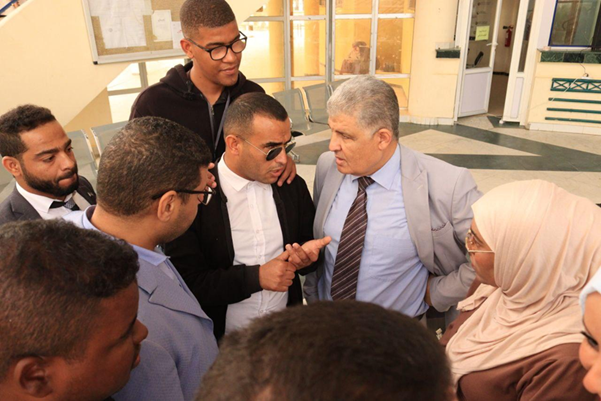
The University of El Oued is committed to ensuring a fair, productive, and harmonious working environment for all its faculty and staff, recognizing that social dialogue is foundational to economic sustainability. A key element of this commitment is the proactive engagement with employee representatives. On November 11, 2024, the University Director held a formal meeting with representatives of the General Union of Algerian Workers (UGTA) branch at the University. The discussion, which included the University’s General Secretary and relevant sub-directors, focused on critical issues impacting employee well-being, including career advancement files, housing needs, and general staff requirements. The Director affirmed that collaborative efforts and continuous integration of the University community are essential for achieving the institution’s educational, research, and developmental strategies.
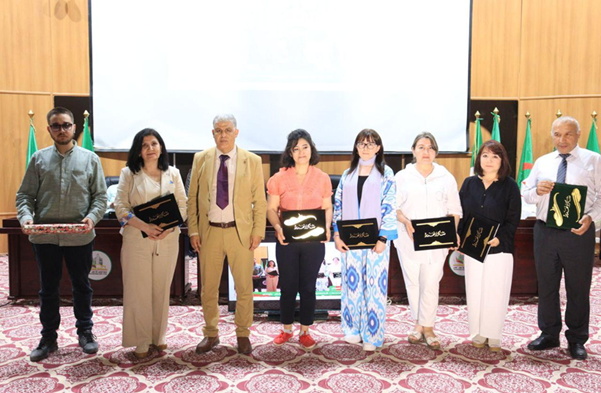
Furthermore, the University ensures the recognition of labor contributions and milestones. On April 30, a celebratory ceremony was organized for Labor Day (May 1st) to honor faculty and staff. The event recognized 41 professors who achieved professorship status and honored a total of 67 distinguished individuals, including former and current vice-directors and senior officials. This ceremony, attended by international guests, reinforces the institutional culture of appreciation and motivates continuous professional excellence, which underpins the quality of the national workforce.
Promoting Inclusive Employment and Equality
A central tenet of the University’s work is promoting full and productive employment for all, especially for marginalised groups, thereby ensuring economic participation is both decent and inclusive. The University celebrates the role of all members of the academic community through dedicated events that underscore equality in the workplace.
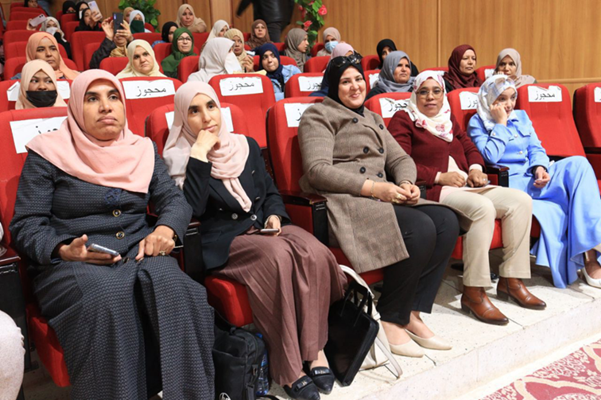
In honor of International Women’s Day on March 6, 2024, the University, supported by the Social Services Committee, hosted a ceremony celebrating female faculty, students, and administrative staff. The University Director praised the pivotal role of women in the Algerian administration, their contribution to national values, and their crucial influence on production, work, and the national economy. This focus supports Target 8.5 on equal pay for work of equal value and economic participation.
The University also maintains an unwavering commitment to students with disabilities. On April 16, 2024, the “Basmat Amal” Club for Students with High Determination organised a special celebration for the Day of Knowledge. The Director personally participated, affirming that all University resources are dedicated to serving these students, whom he recognised as a “symbol of challenge and dedication.” This targeted support fosters inclusive education and development, ensuring that this category of students is prepared for decent work opportunities.
Cultivating Entrepreneurship and Innovation
The University actively fosters an entrepreneurial ecosystem to drive job creation and support economic diversification, aligning with Target 8.3 on encouraging formalisation and growth of micro, small, and medium-sized enterprises.
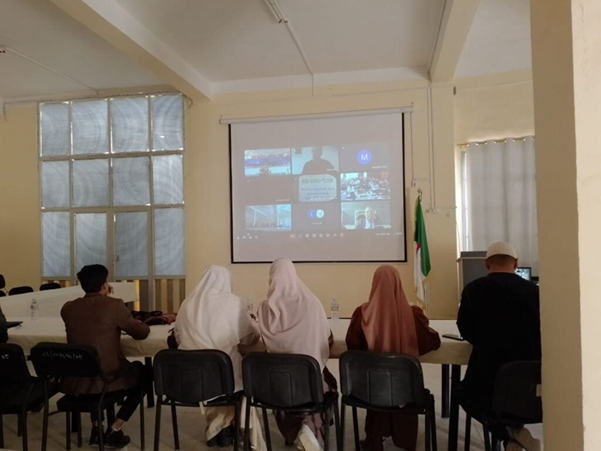
On March 9, 2024, the University facilitated the participation of its students who had received the “Innovative Project” label (representing ten students with six project labels) in an informational meeting on the Algerian Fund for Financing Startups (ASF). Conducted remotely, the session was attended by the Business Incubator manager and the Vice Director for External Relations. This initiative provided students with essential details on accessing funding and methods for establishing their own startup enterprises, directly linking academic innovation to national economic growth and job creation.
Institutional Commitments: Ensuring Decent Work for All
The University of El Oued maintains an institutional commitment to upholding fundamental labor standards and promoting economic security for all its personnel, aligning explicitly with Algerian Labour Law and national regulations. The institution ensures Fair Compensation and Labor Rights by operating under a strict Living Wage commitment, verifying through continuous payroll monitoring that all faculty and staff compensation meets or exceeds the local legal minimum of 20,000 Algerian dinars for a standard work week. This compensation is crucial for economic security across the university community. Furthermore, the University fully supports and formalizes the Recognition of Unions and Labor Rights for all employees, including women and international staff, adhering strictly to national legislation—specifically Law No. 22-06—which guarantees the right to collective bargaining and association. Regular, structured dialogue between administration and union representatives is fundamental to fostering a cooperative, transparent, and responsive workplace environment.
To secure an equitable and ethical workplace, the University enforces a robust Employment Policy on Ending Workplace Discrimination, which prohibits unfair treatment based on religion, gender, age, sexuality, or refugee status. This policy, which was reviewed in 2023, is reinforced by a zero-tolerance approach and mandates regular awareness and training programs to prevent discriminatory behavior. Simultaneously, the institution adheres to the highest ethical standards through its Employment Policy Against Modern Slavery and Forced Labor, applying stringent measures to eliminate human trafficking, child labor, and all forms of exploitation, in full compliance with international conventions and Algerian national laws. Extending this ethical oversight, the University ensures Equivalent Rights for Outsourced Workers by incorporating clauses in all third-party contracts that mandate fair labor practices, equal pay, and access to worker rights, thereby guaranteeing consistent labor standards across all employment arrangements.
Accountability and fairness in compensation are ensured through dedicated policies focused on equity and transparency. The Employment Policy on Pay Scale Equity and Gender Pay Gap requires a thorough annual review of all salaries to identify and eliminate any gender or role-based wage disparities, reinforcing the University’s commitment to Wage Equality. This systematic tracking provides actionable insights that inform HR policies and lead to immediate corrective actions where discrepancies are identified. Finally, the institution protects all employees through an established and accessible Appeal Process for Employee Rights and Pay. This supportive mechanism ensures that staff can voice grievances or concerns regarding their rights, pay, or advancement opportunities without fear of retaliation, maintaining a transparent and merit-based environment for all promotion evaluations.
Conclusion
The evidence presented confirms that the University of El Oued views SDG 8 as an integrated commitment—not a series of isolated initiatives. By combining structured social dialogue with robust, legally compliant labor policies, we ensure fairness, equity, and stability for every member of our workforce. Crucially, our investment in entrepreneurship, seen in the support provided to students with the “Innovative Project” label, directly links academic output to the national priority of economic diversification and job creation. Moving forward, the University remains strategically focused on scaling these efforts, guaranteeing that our institutional practices and our graduating talent continue to serve as powerful engines for sustainable and inclusive economic development in Algeria