
Introduction
The University of El Oued is deeply committed to ensuring inclusive and equitable quality education and promoting lifelong learning opportunities for all, which is the core mandate of Sustainable Development Goal 4 (SDG 4). Our strategy goes beyond formal degree programs, focusing on integrating advanced technology, fostering entrepreneurial skills, and extending educational access to the wider community. This report highlights key institutional initiatives designed to improve educational quality and expand access to specialized training and knowledge.
1. Enhancing Educational Infrastructure and Digital Access
The University invests strategically in infrastructure and technology to support advanced learning, research, and technical proficiency.
1.1 High-Performance Computing Center (Target 4.4)
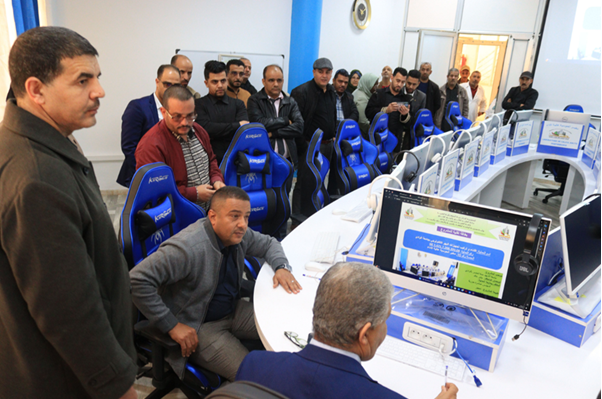
On February 21, 2024, the University Director, Professor Omar Ferhati, inaugurated the High-Performance Computing (HPC) Center at the Central Library. This facility is the first of its kind nationally in terms of equipment and features, linking high-performance computer devices to the HPC server.
Impact and Contribution:
- Advanced Research: The center supports doctoral students and faculty in solving complex technical problems, conducting advanced research through modeling and intricate computational analysis, and developing AI algorithms.
- Digital Skills: The center directly addresses Target 4.4 by equipping students and researchers with specialized skills in advanced computing and Artificial Intelligence (AI), which are essential for future employability.
1.2 Training on Open Source Systems
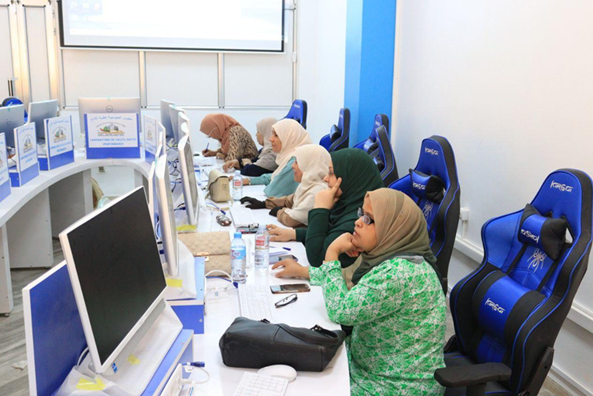
In line with the Ministry of Higher Education’s drive, the University launched a training session on Linux Open Source System and LibreOffice software, targeting chief engineers and state engineers in IT. This initiative ensures that university technical staff are proficient in cost-effective, open-source digital tools.
2. Promoting Lifelong Learning and Vocational Skills
The University actively hosts professional and vocational training programs open to staff and the broader community, ensuring continuous skill development.
2.1 Entrepreneurship and Financial Literacy Training
The University places a high value on developing entrepreneurship and financial inclusion skills:
- Trainer Development: A Training of Trainers (TOT) course for Entrepreneurship Development Center coaches was launched on February 6, 2024, in coordination with the National Agency for Entrepreneurship Support (NESDA). This structured, programmed training aims to create a sustainable pool of experts to guide student-led projects.
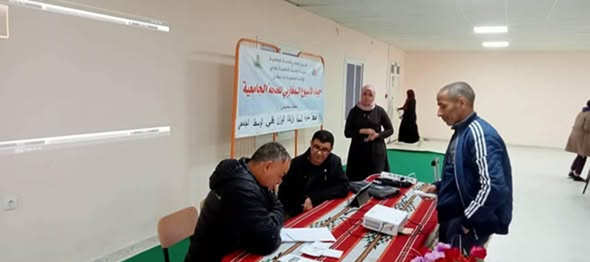
- Financial Inclusion Outreach: The University hosted Open Doors Days organized by the Professional Association of Banks and Financial Institutions (ABEF) on
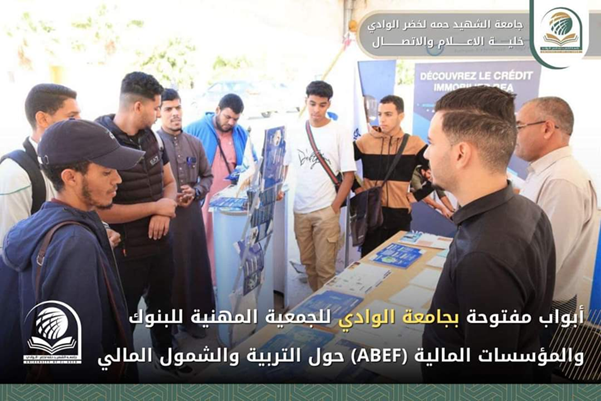
- Financial Education and Inclusion. The event promoted awareness of electronic payment benefits and financial literacy among the university community.
- Startup Development: The launch of the Second Training Course for Micro-Project Holders further supports students and graduates seeking to realize their business ideas.
2.2 Specialized Skill Workshops
The University organizes specialized, hands-on workshops that enhance practical and professional competencies:
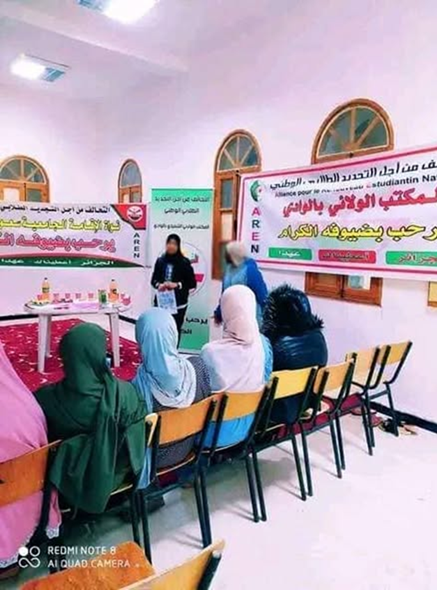
- First Aid Training: A First Aid Training Course was organized at Saudi Bashir University Residence in coordination with a national student association, providing essential life skills.
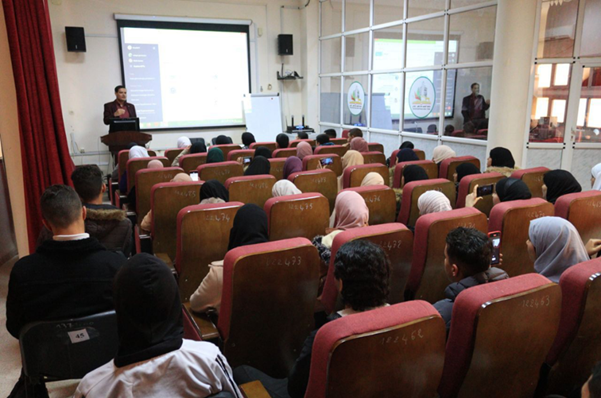
- AI and Research: A workshop on Artificial Intelligence and its uses in Software and Scientific Research was organized, catering to faculty and students to integrate cutting-edge technology into academic work.
3. Extending Educational Outreach to the Community (Target 4.3.4)
The University actively engages with its educational and social environment to extend learning opportunities beyond the campus perimeter.
3.1 Outreach to Secondary School Students
The University hosted secondary school students from several municipalities to learn about Applications of Artificial Intelligence (AI). These lectures, part of the AI House series, introduced students to AI programs, programming languages, and the strategic importance of AI in physics, mathematics, and future careers. This is a crucial outreach effort to prepare high school students for higher education and future skills.
3.2 Off-Campus Training and Community Engagement
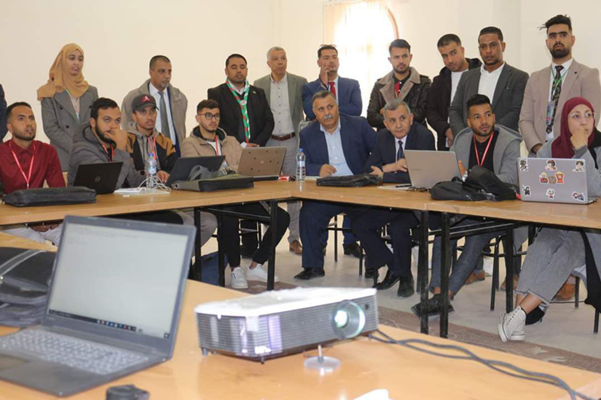
The University participated in the Souf Youth Forum, organized by the Supreme Council for Youth. The University Director, along with deans and faculty, presented training workshops on topics including desert agriculture, programming, and AI. This direct involvement in an off-campus, community-focused forum provides vocational training and knowledge sharing to local youth.
4. Promoting Health Education and Historical Awareness
The University integrates health and cultural education into student life to support holistic development.
4.1 Health Awareness and Nutrition
In line with the Maghreb University Health Week, the University organized several health activities for female students:
- Health Seminar: An activity on Healthy Nutrition was conducted by Dr. Fawzi Rakh.
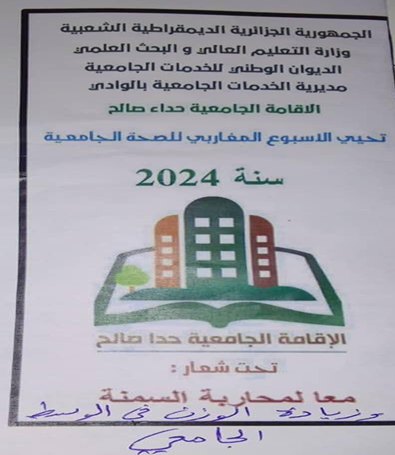
- Open Dialogue: An open, engaging dialogue on Combating Obesity and Weight Gain in the University Environment was organized at Hadhaa Saleh Residence, featuring a specialized nutritionist from a Brussels university. These initiatives enhance student well-being and life skills.
4.2 Cultural and Historical Education
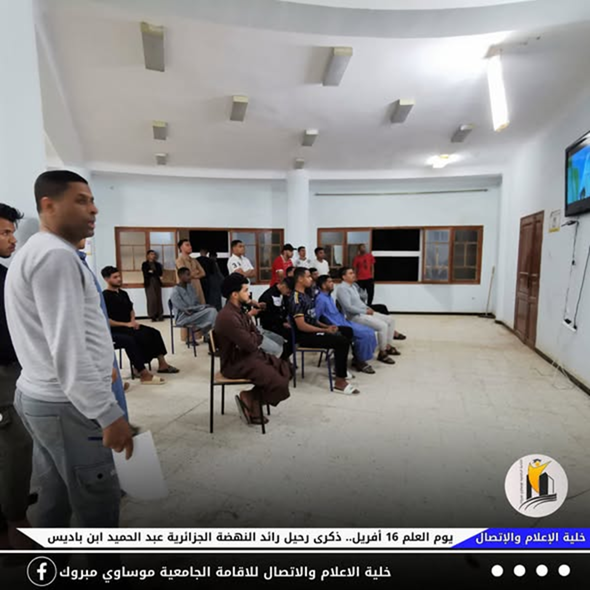
To commemorate Knowledge Day (April 16, 2024), the University Residence Moussaoui Mabrouk organized a screening of a film detailing the life of the scholar Abdelhamid Ben Badis, a pioneer of the modern Algerian renaissance. This initiative promotes historical literacy, role modeling, and cultural identity among the ascending generation.
5. Ensuring Equitable Access and Inclusivity
The University demonstrates its commitment to equitable access through support for vulnerable groups and international students.
5.1 Support for Students with High Determination (Disabilities)
The university operates the “Basmat Amal” (Hope’s Imprint) Club for Students with High Determination, which, in collaboration with the Psychological Assistance Center, organized a national scientific seminar on Professional Integration in the Job Market. This active support ensures that educational and career opportunities are fully accessible to students with disabilities.
5.2 International Academic Cooperation
The University actively implements its twinning agreement with Uzbekistan State University of World Languages, including a formal ceremony honoring Uzbek students upon completion of their Arabic language training. This initiative highlights the university’s dedication to supporting international students and fostering cross-cultural educational exchange.
Conclusion
The University of El Oued has strategically advanced SDG 4 by prioritizing access, quality, and relevance in its educational provision. Through significant investment in the High-Performance Computing Center and robust training programs on entrepreneurship and digital tools, the University is actively preparing its students and staff for the demands of the 4th Industrial Revolution. Crucially, by extending its knowledge resources beyond the campus—such as providing AI workshops to secondary school students and vocational training in the Souf Youth Forum—the University fulfills its role as a key driver of lifelong learning and equitable education for the entire community, laying a strong foundation for future human capital development in the region.