
University of El Oued
Introduction
The University of El Oued promotes Sustainable Development Goal 16 (Peace, Justice, and Strong Institutions) via a detailed comprehensive strategy outlined in this report. This method integrates focused academic research that informs national policy, promotes transparent institutional governance through participation, fosters values-based education for future civic leaders, and establishes strategic partnerships to enhance digital capacity. These initiatives demonstrate the university’s active role as both a subject and an agent of positive institutional change.
- Research-Policy Nexus for Peace and Justice
The University of El Oued addresses justice and institutional integrity through a comprehensive approach that unites legal research, economic analysis, and institutional policy. Within the Faculty of Law and Political Science, laboratories like International Law Changes and its Impact on Algerian Law and Public Policies & Improving Public Services (LPDDSA) lead research on legal reform, human rights, and challenges such as organized crime and cybersecurity. Their work provides critical analysis aimed at strengthening Algeria’s legal frameworks to guarantee fair justice and protect citizen liberties. This legal focus is complemented by the Faculty of Economics, which produces key research on the economic dimensions of institutional integrity.
Studies empirically examine the intricate relationship between corruption and economic growth (Bouteraa et al., 2024) and use dynamic data to assess its specific performance impacts (Djouadi et al., 2024). This combined research focus is powerfully underpinned by the university’s own “Anti-bribery and Corruption Policy” (2024), demonstrating a unified institutional commitment to both studying and actively implementing the core principles of transparency and accountability. These initiatives showcase the university as an active participant in national and global dialogues concerning justice and institutional integrity.
- Transparent Governance and Institutional Accountability
The university’s governance embodies the SDG 16 principles of transparency, accountability, and participation. This is evidenced by governing statutes mandating elected representation for students, faculty, and staff, ensuring a formal role in policy-making. This structure is complemented by a formally recognized independent student union that provides advocacy and governance input. The commitment is further solidified by an Academic Freedom Policy guaranteeing open inquiry and the publication of comprehensive financial data for stakeholder review.



- Cultivating Justice through Education and Student Action
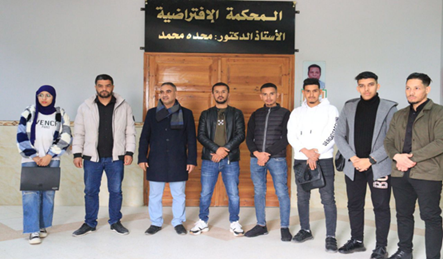
The university promotes justice by integrating practical, values-oriented learning into the student experience. The Faculty of Law and Political Science is central, preparing graduates prepared for careers in law and civil enforcement. This formal curriculum is enhanced by hands-on programs, including practical legal training through simulation trials and legal clinic initiatives. This is amplified by a vibrant ecosystem of student-led clubs and associations, which focus on human rights and social advocacy, empowering students to address real-world inequalities and foster a campus culture of justice.

- Forging Partnerships for Stronger Institutions
The university’s mission transcends its premises boundaries, acting as a vital collaborator in enhancing the region’s institutional fabric. This commitment is demonstrated through a proactive approach to digital governance and capacity building, which fosters transparency and accountability.
The university actively builds expertise by providing its staff with specialized training in critical areas such as Public Procurement and Information Security. These initiatives are fundamental to promoting integrity and transparency in public administration. This focus is complemented by the adoption of modern governance tools, as the university implements and provides training on its HR Information System (SIRH) and its Digital Repository. Furthermore, its focus on Open-Source Applications demonstrates a significant institutional commitment to transparency, data accessibility, and accountable management.

The university leverages this expertise in wider forums, such as participating in regional workshops to improve institutional performance and visibility, reinforcing its role as a model for building modern, strong, and just institutions.

Conclusion
The University of El Oued contributes to SDG 16 through a comprehensive integration of research, policy, education, and external engagement. This report presents evidence, ranging from high-impact legal research to the implementation of transparent digital governance tools, that illustrates a cohesive institutional commitment. The university serves as both an academic institution focused on peace and justice and a practical environment for the application of these principles. The University of El Oued reinforces its essential role in promoting a more just, peaceful, and inclusive society through the cultivation of integrity, the empowerment of its students, and the enhancement of its regional partnerships.