
University of El Oued
Introduction
Sustainable Development Goal 15 focuses on the sustainable management of terrestrial ecosystems, forest conservation, and combating land degradation and biodiversity loss. The University of El Oued, located in a semi-arid Saharan region, is actively engaged in initiatives addressing desertification, ecosystem restoration, and environmental education, contributing to local and regional efforts aligned with SDG 15.
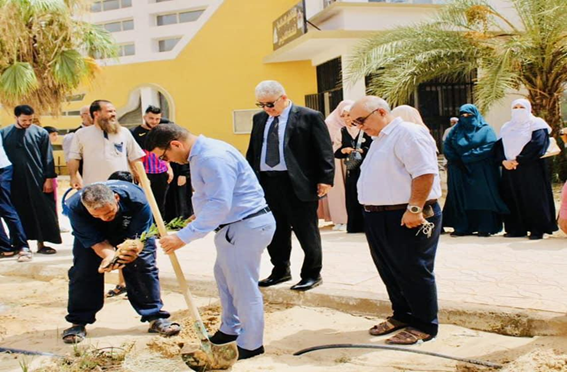
In 2024, the University of El Oued undertook significant campus greening and ecological restoration efforts as part of its commitment to SDG 15 Life on Land. The institution actively participated in the national re-afforestation campaign, coordinating with the Conservation of Forests of the Wilaya of El Oued and the National Carob Development Association, to plant carob trees at the entrance and periphery of the Faculty of Natural and Life Sciences. Through this initiative, the university not only enhanced its green campus infrastructure but also contributed to biodiversity preservation, soil protection and desertification mitigation critical issues for its Saharan regional context. The project aligns with the University’s Sustainability Policy, which sets a goal of launching tree-planting campaigns of 1,000 drought-resistant trees per year in collaboration with the local municipality.
Research: Conserving Desert Ecosystems and Achieving Land Degradation Neutrality
The University of El Oued’s Faculty of Nature and Life Sciences is proactively addressing the unique environmental challenges of the Algerian Sahara, contributing directly to the sustainable management of terrestrial ecosystems and halting biodiversity loss. Their research focuses on both the ecological threats posed by unsustainable resource practices and the comprehensive assessment of local wildlife.
A critical study titled “Oued Souf (Algerian Sahara): balancing rising groundwater and agricultural sustainability” tackles the paradoxical challenge of rising groundwater in the arid desert. This phenomenon, primarily caused by poor water resource management and aquifer recharge from wastewater, threatens land sustainability and the region’s distinctive agricultural system, known as the Ghouts. These unique palm grove depressions are essential for local food security and culture. The research demonstrates that overexploitation and unregulated water usage in Oued Souf lead to significant environmental degradation and agricultural loss. To address this, the study advocates for a comprehensive, multi-stakeholder management system focused on achieving land degradation neutrality. Key recommendations include minimizing excessive pumping, employing artificial recharge methods to replenish reserves sustainably, and regulating water flows to control rising water levels, thus ensuring the long-term viability of Saharan aquifers and the associated terrestrial ecosystems.
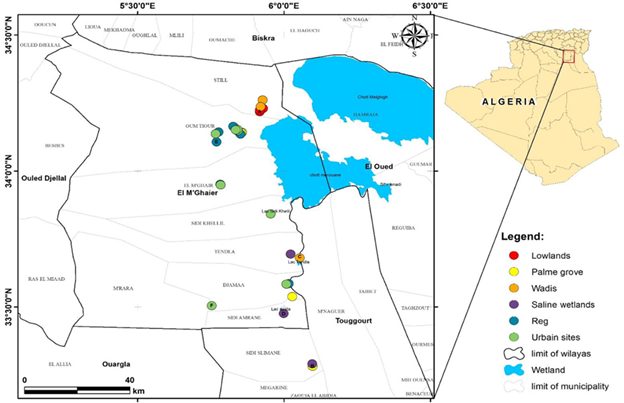
Complementary to land management, the University conducted a comprehensive biodiversity assessment published under the title “Amphibian and reptile diversity in natural landscapes and human-modified habitats of the Sahara Desert of Algeria: A better understanding of biodiversity to improve conservation.” This pioneering ecological study fills a significant knowledge gap by investigating the spatial and seasonal distribution of herpetofauna across diverse Saharan biotopes, including lowlands, desert pavements, salt lakes (Sabkhas), palm groves, and urban sites. Researchers identified 32 species—approximately 30% of the entire Algerian herpetofauna—including 8 species protected in Algeria and 9 endemic to the Mediterranean region. The study established that human-modified habitats like palm groves exhibit the highest species richness, while environments like salt lakes and urban sites show the lowest diversity and highest environmental stress. The findings provide quantitative data essential for developing targeted conservation strategies and underline the need to integrate biodiversity values into regional development planning, particularly by safeguarding mesic biotopes that support the highest variety of life.
Institutional Policy and Collaboration
The University of El Oued maintains its commitment to land conservation through a robust framework of internal policies and strategic external collaborations. The institution actively pursues Local and National Cooperation, forging agreements with regional organizations focused on the sustainable use of land, the preservation of local ecosystems, and targeted community education initiatives. Furthermore, national partnerships are established with stakeholders to engage in joint research and capacity-building projects that address complex conservation challenges across the country.
This external engagement is underpinned by a series of rigorous internal Policies Supporting Land Conservation that align with national regulations and international environmental frameworks. Key institutional directives include a comprehensive Policy on the Conservation and Sustainable Use of Terrestrial Ecosystems, ensuring the responsible management of local drylands and other vital ecosystems associated with the university. To protect regional biodiversity, the University enforces a Policy on Monitoring and Protecting Endangered Species, specifically identifying and safeguarding IUCN Red Listed species found in the vicinity, and a Policy on the Reduction of Alien Species Impact, regulating the introduction of non-native species on campus. Environmental health is further secured by a strict Policy on Hazardous Waste Disposal, guaranteeing that all materials are managed in adherence to environmental laws to minimize ecological impact. Finally, the institution demonstrates its commitment to waste reduction through a significant Policy on Plastic Waste Reduction, promoting recycling and eco-friendly alternatives across campus operations.
The collective impact of this research and policy framework establishes the University of El Oued as a leading institution in generating scientific knowledge crucial for the sustainable use and conservation of the unique Saharan biome.
Partnerships and Community Engagement
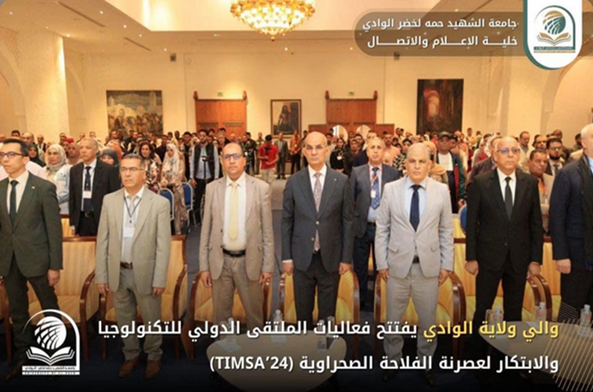
The outcome of the research underscores the university’s innovation capacity and its contribution to sustainable land management and ecosystem restoration in a Saharan context. Moreover, the institution participated in the TIMSA’24. International Forum for Technology and Innovation for the Modernization of Desert Agriculture, held on 20–21 November 2024, at which researchers and stakeholders explored five key themes including soil and water management.
In 2024, the University of El Oued strengthened its partnerships with local authorities, environmental NGOs, and regional institutions to promote sustainable land use and ecosystem restoration. Collaborating with the Wilaya’s Directorate of Agriculture and organizations such as the National Carob Development Association, the university implemented joint initiatives for reforestation, soil rehabilitation, and biodiversity preservation. These activities included community tree-planting campaigns, ecological workshops, and participatory field projects, which allowed students and faculty to directly engage with local communities.
Conclusion
In 2024, the University of El Oued actively advanced SDG 15 through reforestation, soil rehabilitation, biodiversity studies, and community-based ecosystem projects. By integrating environmental topics into the curriculum, engaging students in fieldwork, and collaborating with local authorities and NGOs, the university strengthened both ecological resilience and community awareness.