
Introduction
Sustainable Development Goal 12 (SDG 12), which aims to ensure sustainable consumption and production patterns, has become a national priority for Algeria. This commitment is demonstrated through strategic frameworks such as the National Action Plan for Environment and Sustainable Development 2035 (PNAE-DD) and the Sustainable Consumption and Production National Action Plan (SCP-NAP). Within this national context, the University of El Oued emerges as a key contributor, actively advancing SDG 12 through comprehensive policies on ethical sourcing, waste management, and campus sustainability. These efforts are further amplified by the university’s community outreach and dedicated research initiatives. This report details the specific strategies and achievements undertaken by the University of El Oued in support of this critical global goal.
Research
1- Salt stress responses in Chenopodium quinoa Willd.: A comparative analysis of germination and early seedling growth across cultivars
This study evaluated the effects of salt stress on seed germination and early seedling growth across five quinoa (Chenopodium quinoa Willd.) cultivars. The seeds were exposed to varying concentrations of sodium chloride (NaCl), ranging from 0 to 205 mM. Among the cultivars tested, Blanca de Junin demonstrated the highest salt tolerance, achieving 100% germination even at 205 mM NaCl. In contrast, Amarilla Sacaca exhibited the lowest germination rate, at 63.75% under the same saline conditions. Germination energy at the highest salt concentration ranged from 92.5% in Blanca de Junin to 56.25% in Amarilla Sacaca. Salt stress also led to significant reductions in seedling and radicle length, with decreases ranging from 44.76% to 71.29% and 31.68% to 73.16%, respectively. The findings reveal considerable genotypic variation in salt tolerance among the quinoa cultivars, with Blanca de Junin showing notable resilience during both germination and early growth stages. These results offer important implications for developing salt-tolerant quinoa varieties and promoting their cultivation in saline-affected areas, thereby supporting sustainable agricultural practices and enhancing food security in marginal environments.
2-Clays-based geopolymers: a sustainable application as adsorbent of cytostatic drugs for water purification
The increasing use of cytostatic drugs in chemotherapy poses a growing environmental threat, underscoring the critical need for effective methods to remove these hazardous pollutants from wastewater before they enter aquatic ecosystems. Adsorption is a prominent technique for water treatment, valued for its effectiveness, cost-efficiency, and operational simplicity. This study investigates a novel, cost-effective foamed geopolymer—synthesized from illito-kaolinitic clay (Douiret, Tunisia) and industrial waste (silica fume, phosphogypsum)—for removing the cytostatic drugs paclitaxel (PCX) and irinotecan (IRI) from water. The geopolymer was characterized before and after adsorption using XRD, FTIR, SEM, and TGA. Batch adsorption tests under varying conditions demonstrated exceptional removal efficiencies of nearly 100% for PCX and 89% for IRI using 20 mg of adsorbent and an initial drug concentration of 2.5 mg/L. Characterization analyses revealed that adsorption occurred through physical interactions, pore filling, electrostatic attraction, and hydrogen bonding. With a specific surface area of 82.23 m²/g and a pore volume of 0.19 cm³/g, the geopolymer also proved highly effective in treating contaminated natural water samples, including influent, effluent, and surface water. These findings highlight its significant potential for practical, cost-effective water purification
3 – Assessment of anticoagulant potential of Halocnemum strobilaceum (Pall.) against black rat (Rattus rattus Lin.) from Algeria
This study evaluates the anticoagulant potential of Halocnemum strobilaceum (Pall.) as a natural rodenticide against black rats (Rattus rattus Lin.) in Algeria. The results demonstrate that extracts from this plant possess significant blood anticoagulation properties in rats, leading to internal bleeding and substantial mortality rates. This effect was confirmed through laboratory and field tests monitoring coagulation parameters and mortality rates. These findings highlight the potential of using this plant as an environmentally friendly alternative to conventional chemical rodenticides, opening new avenues for developing sustainable pest control strategies in Algerian regions while minimizing negative impacts on the ecosystem.
4- Valorizing date palm spikelets into activated carbon-derived composite for methyl orange adsorption: advancing circular bioeconomy in wastewater treatment—a comprehensive study on its equilibrium, kinetics, thermodynamics, and mechanisms
This study valorizes date palm spikelets (DPS), an agricultural waste, to synthesize a novel ZnO-functionalized activated carbon composite (ZnO@DPS-AC) for water treatment. Synthesized via ZnCl₂ activation and pyrolysis at 600°C, the composite was characterized as highly carbonaceous (>74% C) and porous. It demonstrated exceptional efficiency in adsorbing methyl orange (MO), removing over 99% of the dye under optimized conditions with a rapid 45% reduction within the first 10 minutes. The adsorption process, well-described by the Langmuir model, showed a maximum capacity of 226.81 mg/g at 20°C, primarily through hydrogen bonding, π-π interactions, and pore filling. The composite’s efficacy in treating real wastewater and other pollutants underscores its potential as a sustainable, high-performance adsorbent, aligning with circular bioeconomy principles
5-Oued Souf (Algerian Sahara): balancing rising groundwater and agricultural sustainability
This research examines the paradoxical phenomenon of rising groundwater levels in the Algerian Sahara, a region typically associated with aridity. This environmental challenge is primarily driven by the recharge of aquifers with wastewater from local activities, a consequence of poor water resource management. The resulting overexploitation in areas like Oued Souf threatens the environment and has led to significant agricultural losses in the Ghouts. To address this, the study emphasizes the critical need for a sustainable management system that engages all relevant stakeholders. Key strategies include preventing aquifer overuse and excessive pumping, implementing artificial recharge techniques to replenish reserves, and regulating watershed flows to mitigate the rising water levels.
6-Environmental resilience through artificial intelligence: innovations in monitoring and management
The rapid advancement of artificial intelligence (AI) is now being directed toward critical environmental challenges. This review comprehensively examines AI’s transformative role in environmental monitoring and preservation. It traces the technology’s evolution before delving into its specific applications for analyzing remote sensing imagery, addressing key tasks such as per-pixel analysis, object detection, and semantic understanding. The review further explores AI’s implementation in environmental control systems, including wastewater treatment, solid waste management, and early-warning systems. The analysis underscores that AI significantly enhances accuracy, adaptability, and real-time decision-making, establishing it as a cornerstone for building a sustainable and resilient future.
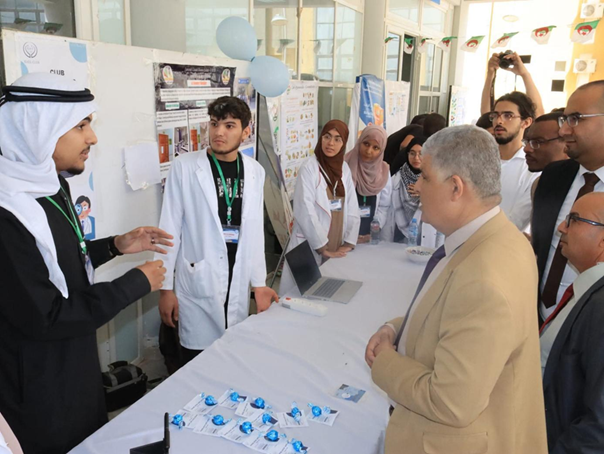
Healthy nutrition is an activity under the title “Your medicine is in your food”
Under the slogan “Your Medicine in Your Food,” the University of El Oued successfully organized an international forum championing responsible consumption and production (SDG 12). The event, orchestrated by the “Bassmat Amal” club for individuals with determination in coordination with the Faculty of Natural and Life Sciences’ medical annex and in partnership with the “Raiel” club and the Celiac Disease Association, featured a distinguished gathering. Attendees included the University President, Professor Omar Ferhati, faculty deans, civil society representatives, and a delegation from Tunisia. The program featured scientific seminars focused on sustainable and healthy nutritional patterns, with specialized lectures on adapting these for people with disabilities. A concurrent exhibition showcased sustainable food products for celiac patients and highlighted the scientific achievements of university clubs. The event further fostered knowledge exchange through cultural and athletic competitions, collectively raising awareness for sustainable consumption and production. The forum culminated in an honoring ceremony for all participants and contributors, standing as a tangible model for advancing the principles of SDG 12.
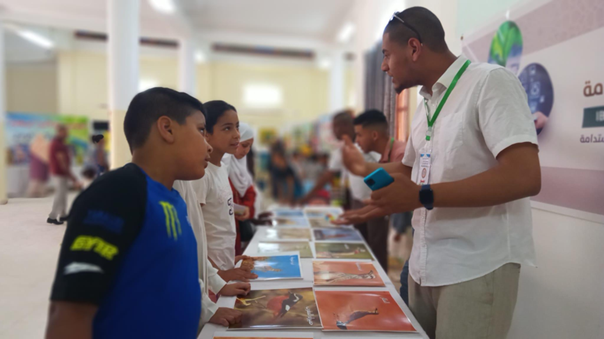
The Absar Club participated in a reading festival celebrating migratory birds and the environment.
On the occasion of World Children’s Day, the “Ibsar” Club for Sustainable Development at the University of El Oued partnered with the local cultural festival “Reading in Celebration” to organize an educational environmental activity. The event focused on introducing children to the migratory birds of the Souf Valley region and their role in maintaining ecological balance, while emphasizing the importance of preserving natural resources and biodiversity. Through interactive workshops, members of the club educated children on practical ways to protect local wildlife and minimize their environmental impact, highlighting the principles of sustainable consumption and responsible interaction with ecosystems. This initiative directly supports SDG 12 (Responsible Consumption and Production) by promoting awareness of sustainable resource use, reducing ecological footprints, and encouraging environmentally conscious behaviors from an early age. The activity also reinforced the importance of community partnerships in advancing sustainable development goals, demonstrating how local actions can contribute to global sustainability efforts.
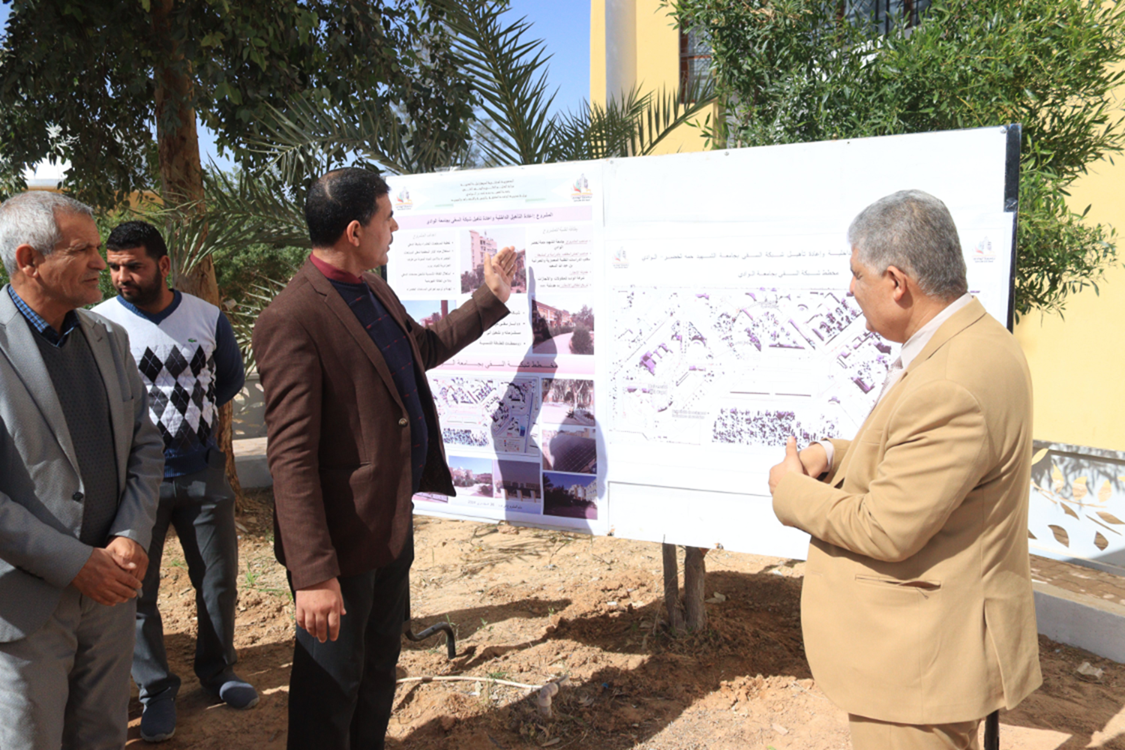
The rector of El Oued University oversees the “A Tree for Every Professor” initiative for newly hired professors.
In fulfillment of its commitment to achieving Sustainable Development Goal 12 (Responsible Consumption and Production), Professor Omar Ferhati, President of University of El Oued, along with the Vice President for Development and Foresight, launched two integrated environmental initiatives that embody the university’s vision for environmental sustainability.
Initiative 1: “A Tree for Each Professor”
This initiative was implemented with the participation of newly appointed faculty members and university staff, aiming to:
– Expand green spaces within the university campus
– Enhance environmental responsibility culture among faculty members
– Contribute to ecological balance and mitigate climate change impacts
Initiative 2: Rehabilitation of Internal Irrigation Networks
The launch of the irrigation network rehabilitation project includes:
– Installation of smart water-saving irrigation systems
– Improvement of water consumption efficiency by up to 40%
– Implementation of modern technologies adapted to desert climate conditions
These two initiatives represent a practical model of the university’s commitment to achieving sustainable development goals and reflect its dedication to being an incubator for environmental innovation and a beacon of sustainability in the region.
Conclusion
The University of El Oued translates its commitment to SDG 12 into tangible action through a series of targeted initiatives that champion responsible consumption and production. This is evidenced by the implementation of smart irrigation systems and the “Tree for Each Professor” campaign, which promote the sustainable management of water and green resources on campus. Furthermore, the development of a geopolymer from industrial waste for water treatment, research into salt-tolerant quinoa to secure food production on marginal lands, and the hosting of forums on sustainable desert agriculture demonstrate a deep commitment to innovative and sustainable production cycles. Through this integrated approach of operational greening, cutting-edge research, and community engagement, the University of El Oued is not only aligning with Algeria’s SCP-NAP but is actively constructing a model for a sustainable future in the Sahara region.